To Senate House! Or more to the point, to Senate House Library!
A visit here is always something to be cherished, irrespective of the reason. It’s such a grand, opulent and slightly intimidating building. You know you really shouldn’t be here, but visiting the library gives you access to the Art Deco surrounds within.
The stripped-back modernism and sleek, curving lines are present right from the moment you walk through the main front entrance. Even the elevators have a plush wood-panelled finish. It feels like you’re going on a lavish shopping trip to some new department store in the 1930s.
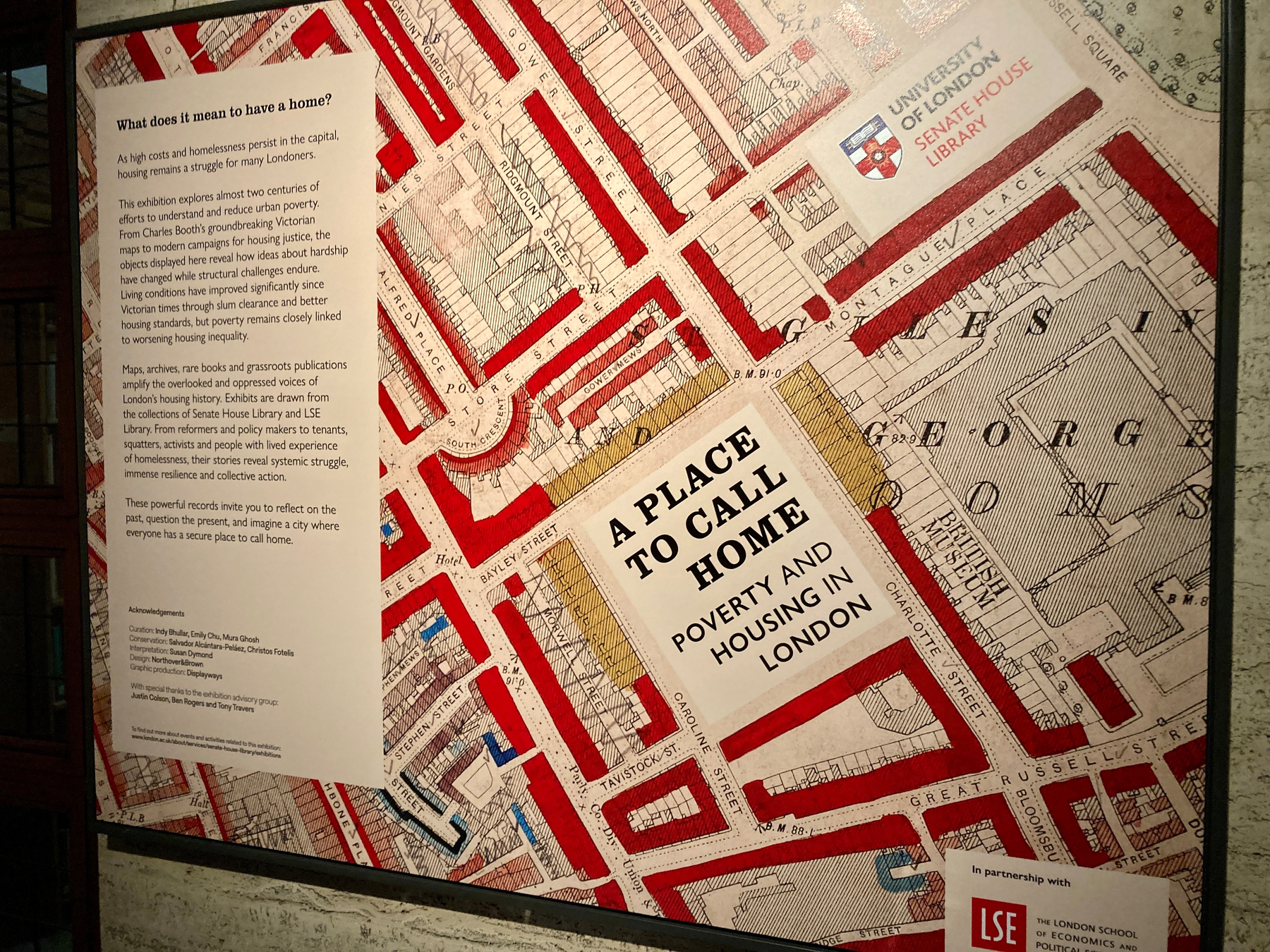
But nope, on the agenda was something very different: A Place to Call Home, Poverty and Housing in London.
Senate House Library has a vast resource of artefacts and documents to draw upon. It’s superb at putting on these social history exhibitions.
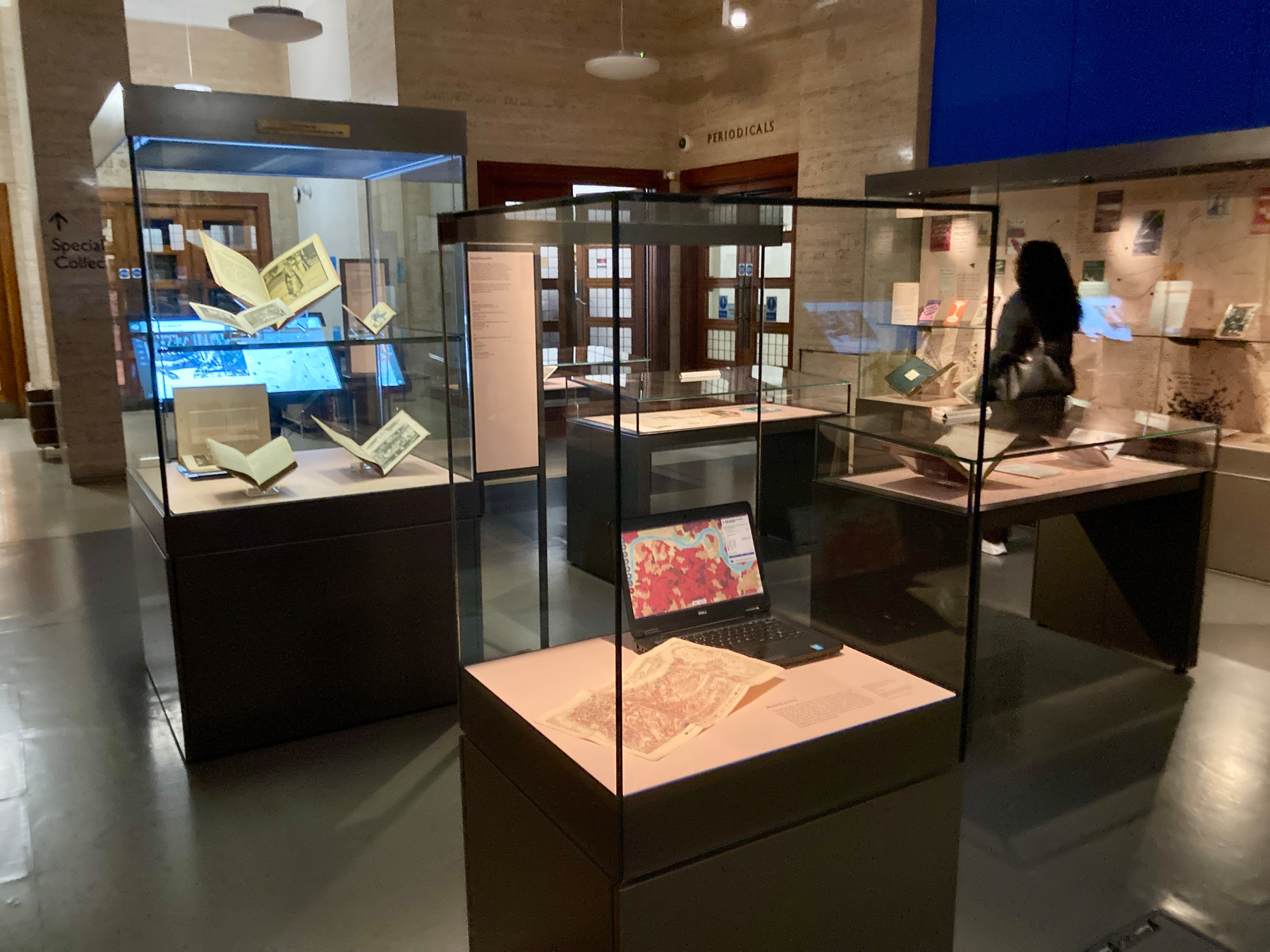
Members of the public are also made to feel most welcome as they enter the exhibition space within the library.
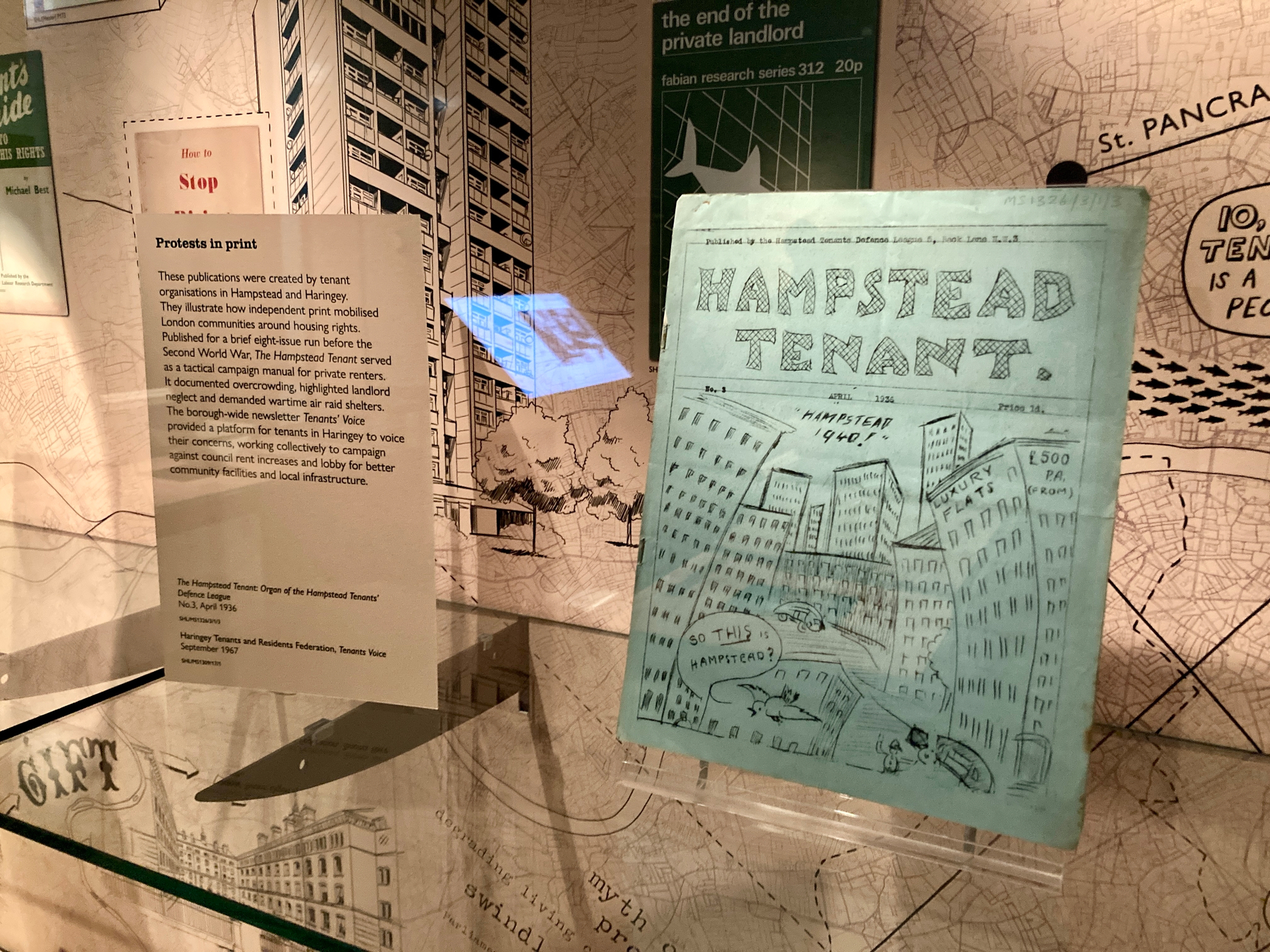
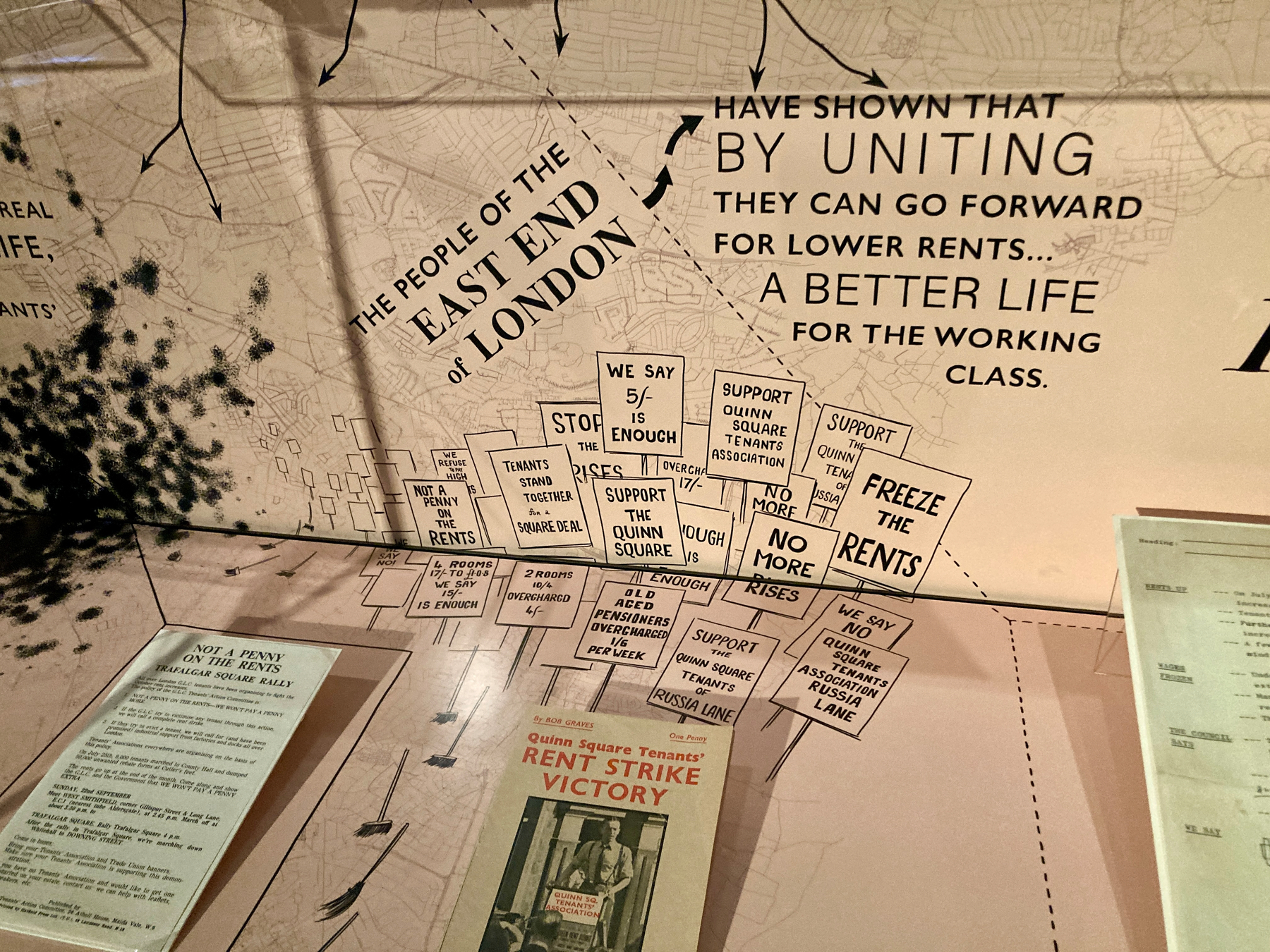
A Place to Call Home features both historic and contemporary housing concerns. The focus is on housing struggles and two centuries of efforts to understand and reduce urban poverty.
A large part of the exhibition draws heavily on the work of Charles Booth and his groundbreaking Victorian maps. There are also some fantastic features looking at modern campaigns focusing on housing and justice.
But it’s the Booth maps that draw most people in. On display here are the original hand-coloured maps drawn up by Booth and his assistants before they were published.
The level of detail is remarkable, as Booth and his team walked every London street and documented what they saw through the medium of maps.
The whole exercise took 17 years to complete. That’s pretty much a lifetime’s work for any person, but it’s all the more remarkable when you consider what else Booth achieved with his social campaigning.
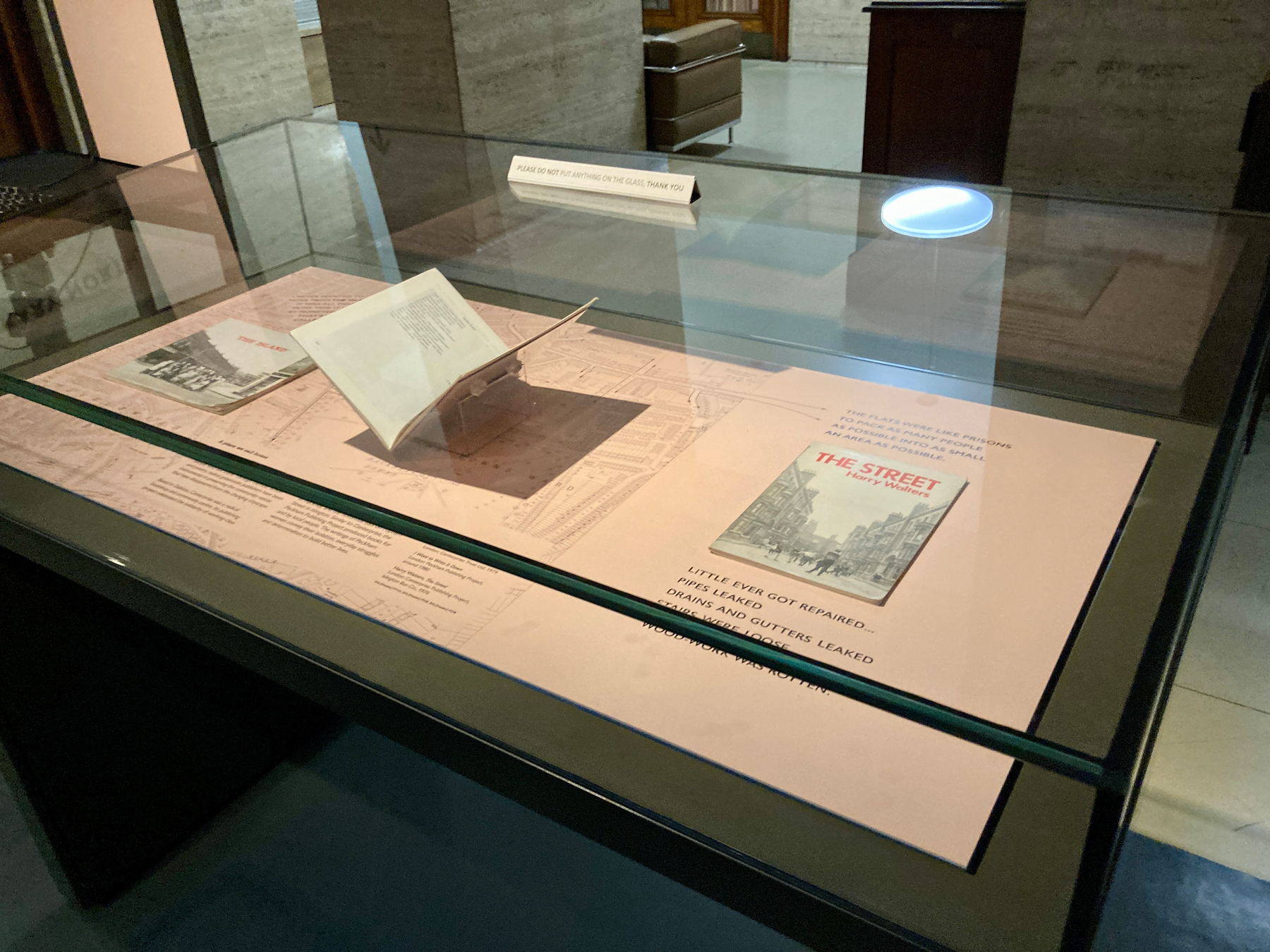
Elsewhere, I was particularly drawn towards the housing campaigns of the 70s and early 80s. There was some great literature from the Peckham Publishing Project.
This is a loose collective that produced books for and by local people. The writing is mainly focused on women in the Peckham area and the isolation they faced as a consequence of their housing struggles.
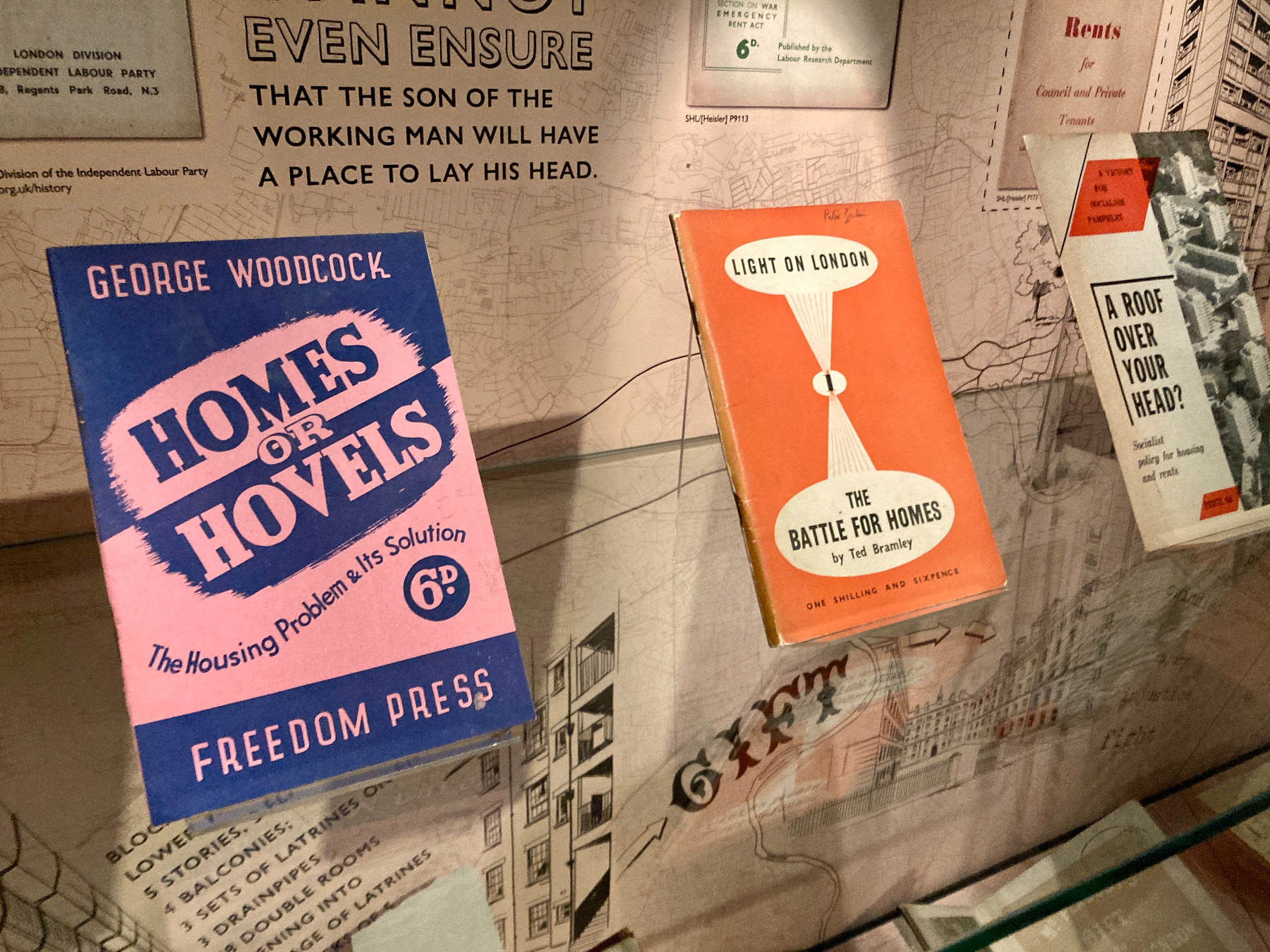
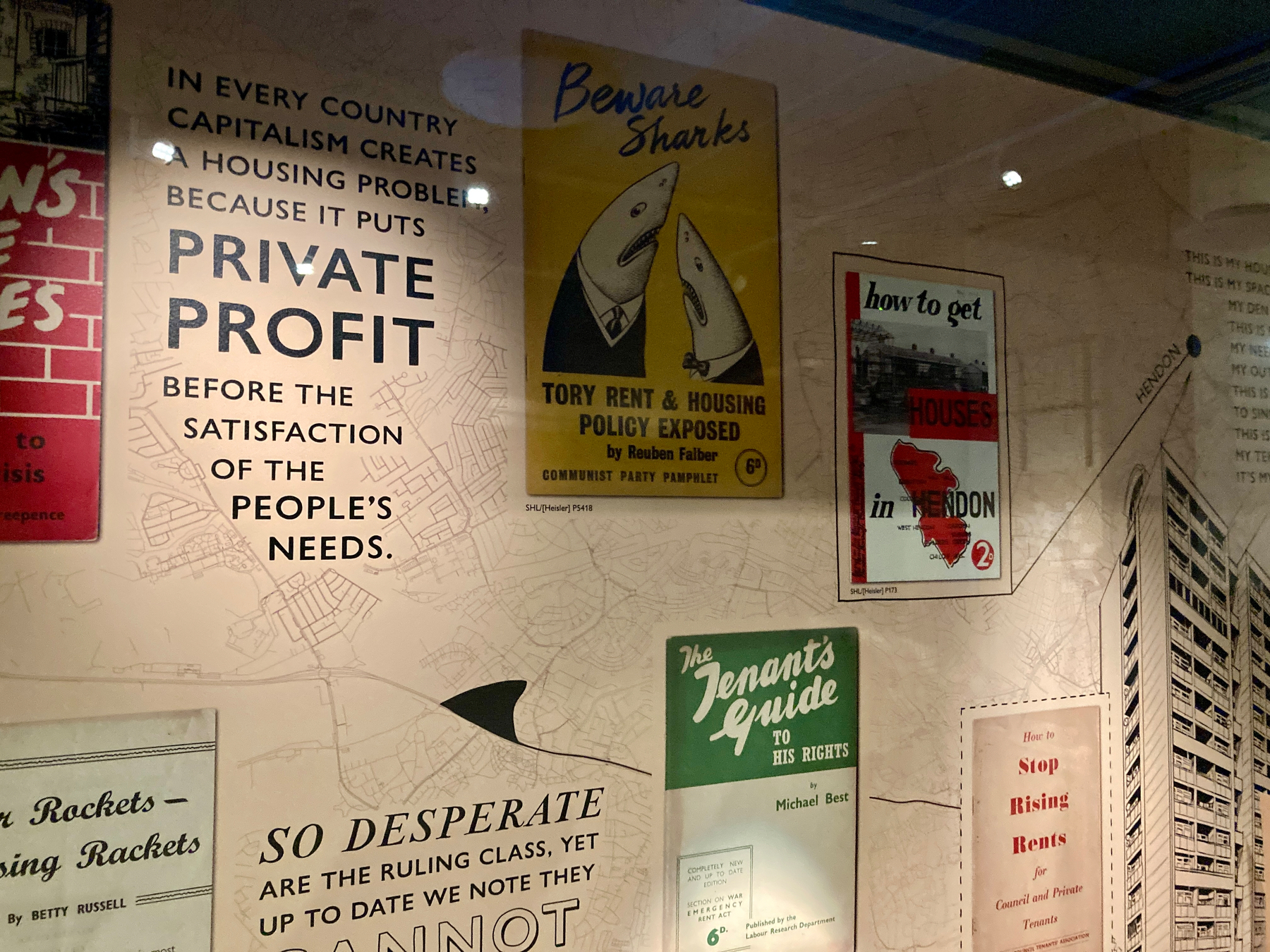
There were also some other political pamphlets promoting different views on rebuilding London after the Second World War.
Three particular items drew my interest. The first was from the anarchist George Woodcock, who, not surprisingly, rejected state-sponsored government ideas, favouring instead self-governing workers' syndicates.
Proposing a different view was Communist leader of the time, Ted Bramley. He wanted a more centrist solution to solving London’s post-war housing problem.
Finally, there was the Victory of Socialism group, who called for a more democratic middle way.
Never trust a Centrist MELT, Comrades.
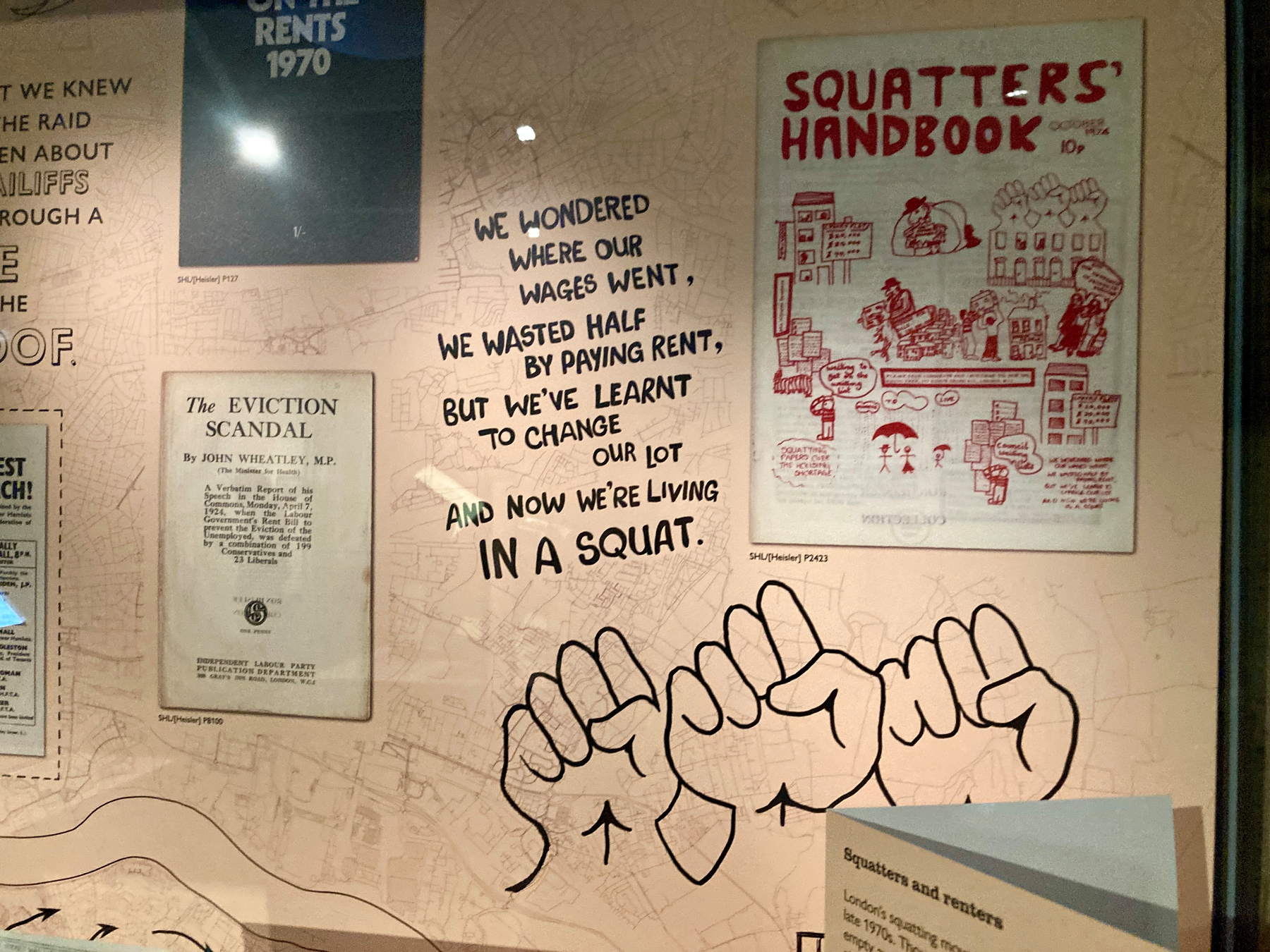
The legendary Squatters' Handbook from 1974 is also on display. I can’t help but think that a 2026 updated edition might help to ease London’s current housing problems.
The exhibition referenced the fact that in 2025 there were 12,938 people registered as sleeping rough in London. This figure barely touches the sides. There are many others who are homeless but are less visible.
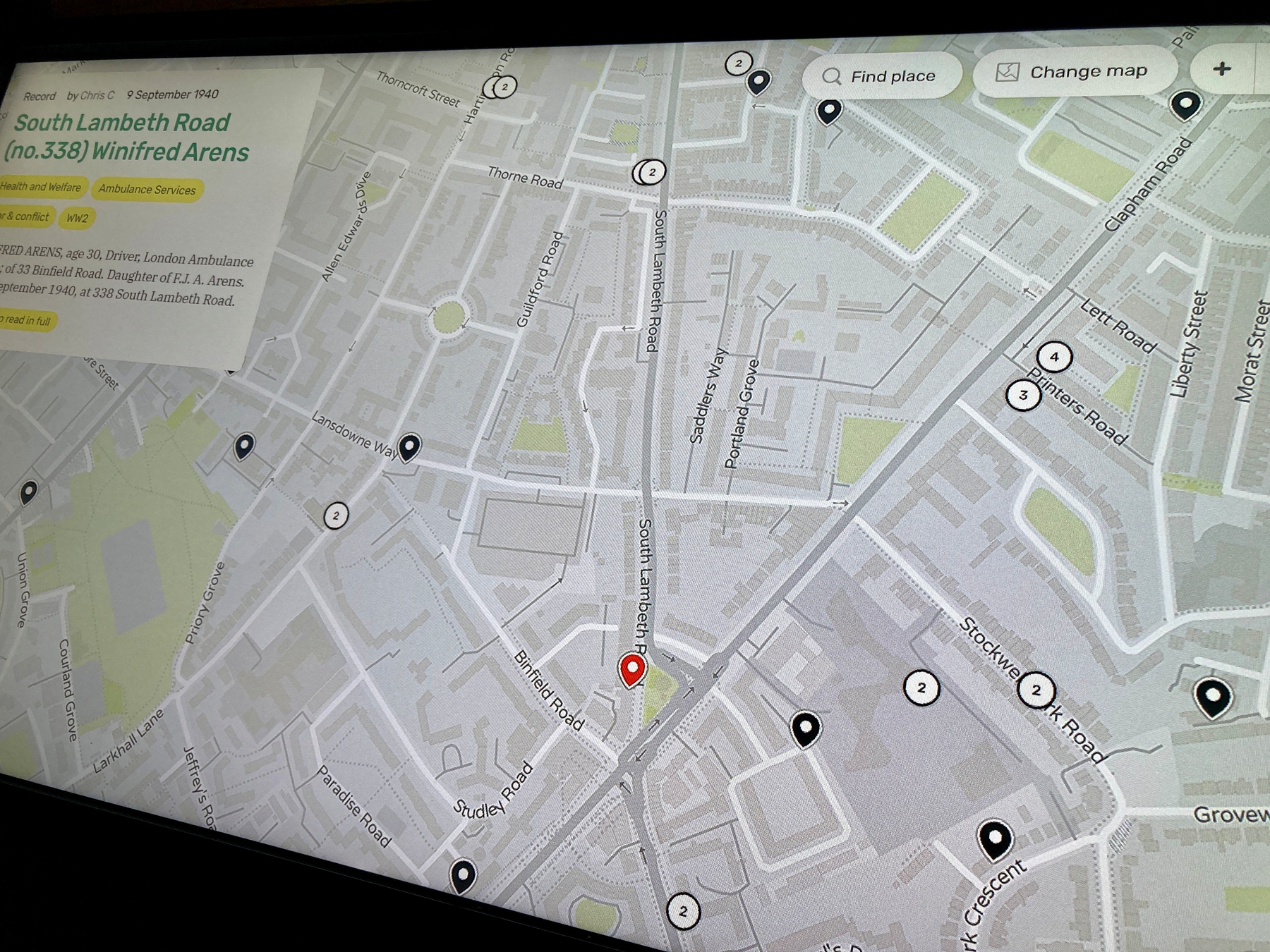
I spent a little too long, perhaps more than I should have, playing around with the interactive overlay map. This was a superb tool for isolating specific issues regarding housing and poverty in London, and then looking up local resources.
My finger hovered perhaps a little too long around my own particular Transpontine patch of South London.
A useful exercise would be to update this with the London Banana. Diamond Geezer has already done a half-decent job of this, focusing on how a dataset including Waitrose and Gail’s can go a long way towards explaining the affluence within the capital compared to some of the poverty outside of the Banana.
It all then felt a little false, heading back through the grand surrounds of Senate House and out through the main entrance once again. This is such a powerful, dominant piece of London architecture, but also one that is able to call upon its resources and share some of the fascinating social history and documents contained within.